top of page







Teachings on Sound
Readings to help you practice, choose an instrument, and live with sound at home.
Sound is simple when we let it be.
These pages are short teachings from our work with the gong: why it belongs in daily life, how to choose one, how to play with awareness, and whatever we add as the practice deepens.
You do not need to read them in order. Start with the question you have today.
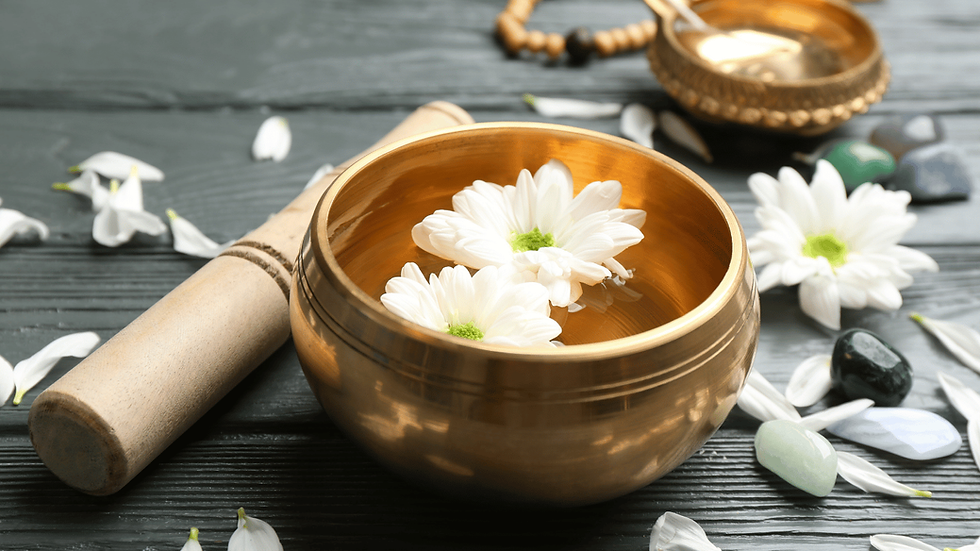
The Gong and the Mallet
A Dance of Feminine and Masculine Energy
When we look at a gong, we may see simply a musical instrument.
But from a symbolic and spiritual perspective, the gong and the mallet can represent something much deeper: the relationship between feminine and masculine energy — the two complementary forces that exist within all of us.
The Gong

Feminine energy. It receives. It does not chase the mallet or force the sound. It remains open, and transforms touch into resonance.

The Mallet
Masculine energy. It initiates. It brings direction, intention, movement, and action. Without it, the gong remains silent.
The Gong: Feminine Energy
The round shape of the gong can symbolize feminine energy.
The gong receives. It does not chase the mallet. It does not force the sound to happen. It remains open and receptive, waiting to receive the touch of the mallet.
When it is struck, it receives that energy and transforms it into something much greater — sound, vibration, movement, and resonance.
This reflects qualities traditionally associated with feminine energy:
Receptivity. Openness. Intuition.
Flow. Nurturing. Creation.
The gong reminds us that receiving is not weakness. There can be tremendous power in openness and receptivity.
The Mallet: Masculine Energy
The mallet can symbolize masculine energy.
While the gong receives, the mallet initiates.
The mallet brings direction, intention, movement, and action. Without movement from the mallet, the gong remains silent.
Symbolically, masculine energy can represent:
Direction. Action. Focus. Intention. Strength. Purpose.
The gong reminds us that receiving is not weakness. There can be tremendous power in openness and receptivity.
But masculine energy is not about force.
A skilled gong player learns very quickly that striking harder does not necessarily create a more beautiful sound.
The mallet must learn how to approach the gong with awareness, sensitivity, timing, and intention.
When Masculine Meets Feminine
Something beautiful happens when the mallet meets the gong.
The masculine initiates.
The feminine receives.
And through their interaction, sound is born.
Neither one can create the same experience alone. The mallet without the gong cannot create the resonance. The gong without the mallet remains silent.
Together, they demonstrate the principle of polarity — two different but complementary energies working together to create something neither can create by itself.
Balance, Not Competition
We all carry qualities that can be described as masculine and feminine within ourselves, regardless of gender.
Sometimes we live too much in action. We push. We control. We plan. We accomplish.
At other times, we may remain too passive — waiting and receiving without taking the action necessary to move our lives forward.
The lesson of the gong is not that one energy is better than the other.
We need both.
Action and receiving.
Direction and openness.
Strength and sensitivity.
Intention and surrender.
Finding Balance Through the Gong
When I play the gong, I like to think of each strike as a meeting between these two energies.
The mallet carries the intention. The gong receives it. The vibration that follows represents what can happen when the two energies come into harmony.
If the strike is too forceful, the sound may become overwhelming. If the strike is too weak, the gong may not fully respond.
But when the player develops the right relationship between action and receptivity, strength and sensitivity, intention and listening, the gong begins to reveal its beautiful range of sound.
This can also become a metaphor for how we live our lives.
Sometimes we need to take action.
Sometimes we need to receive.
Sometimes we need to lead.
Sometimes we need to listen.
And sometimes the greatest harmony comes from knowing when to do each one.

Soft Is Better
One of the most important things I teach about playing the gong is:
Soft is better.
You don't need to hit the gong hard to experience its beauty. In fact, playing softly allows you to listen more deeply and discover the many layers of sound and vibration within the gong.
The mallet should not attack the gong. It should meet the gong with gentleness, awareness, and intention.
Start softly. Listen. Allow the sound to develop.
Give the gong time to respond before asking for more.
You can always gradually increase the intensity when appropriate, but you don't need to force the sound.
This is also a beautiful reflection of masculine and feminine balance.
Masculine energy does not have to be aggressive to be powerful. It can have direction and intention while still being gentle and sensitive.
And the feminine does not simply receive — it responds, expands, and transforms that touch into vibration and resonance.
When the two meet with awareness, power does not come from force. It comes from balance.
You don't need to play harder.
You need to listen deeper.
The gong will teach you how much is enough.
The Gong as a Teacher
For me, the gong is more than an instrument. It can also be a teacher.
Every time the mallet touches the gong, we can be reminded that life is constantly inviting us to find balance between complementary forces.
Masculine and feminine.
Action and receiving.
Strength and softness.
Doing and being.
Intention and surrender.
When these energies work together rather than against each other, something beautiful can emerge.
Just as the meeting of the mallet and gong creates vibration and resonance, balance within ourselves can create greater harmony in the way we live, relate, and experience the world.
The next time you play a gong, don't only listen to the sound.
Feel the relationship between the mallet and the gong.
One initiates.
One receives.
And together, they create the vibration.

Want to Learn How to
Practice Gong Meditation?
If you would like some guidance before beginning your own practice, we invite you to join our 9-Week Gong Meditation Program.
This program is designed to help you experience Gong Meditation for yourself and learn simple ways to make it part of your regular practice at home.
9-Week Gong Meditation Program
Mondays | 6:00 PM – 7:00 PM
January 11, 18 & 25, 2027
February 1, 15 & 22, 2027
March 1, 8 & 15, 2027
Full 9-Week Program: $236
per person
Not ready to commit to the full program?
Drop-In: $36 per class
Come experience one session and discover for yourself what it feels like to meditate with the sound and vibration of a gong.
No previous meditation or gong experience is necessary.
bottom of page